For the enlightened amateur of the 70s, entry into the fabulous world of synthesizers necessarily begins with a… monophonic. As its name suggests, a monophonic instrument is capable of emitting only one sound at a time, or rather, a sound vibrating on a single frequency. This is also the case for acoustic instruments such as the trumpet, the saxophone, the oboe, etc. In the case of the synthesizer, the choice of monophony was long due to a technological limitation: basically, the synthesizer is made from a single oscillator, which generates an electrical frequency. This frequency then undergoes a series of adjustments and transformations (via envelopes, filters, etc.) to result in a musical signal. Playing several notes, of different frequencies, at the same time (in polyphony, therefore), involves multiplying the oscillators. In the pioneering days when Robert Moog created his first model, this would have been far too expensive, even for the wealthiest musician.
But what may initially seem like a limitation has instead made the monophonic synthesizer an instrument in its own right. Indeed, we do not approach a monophonic instrument and a polyphonic instrument in the same way: the role of the monophonic synthesizer is to “place” itself in the music, for example within the framework of a melodic line (or a bass line), while a polyphonic instrument will have more of a rhythmic or harmonic role. Thanks to this characteristic, the monophonic synthesizer has pushed musicians to make it the king in terms of solos, themes, and sound effects… you only have to listen to the “antics” of Rick Wakeman on his Minimoog or Keith Emerson on his modular to be convinced. And, if we want to go back a little further in time, the French ancestor (and with tubes!) of the synthesizer, the “ondes Martenot”, also monophonic, was used for similar functions (imitating the human voice for example).”
Monophonic Keyboards
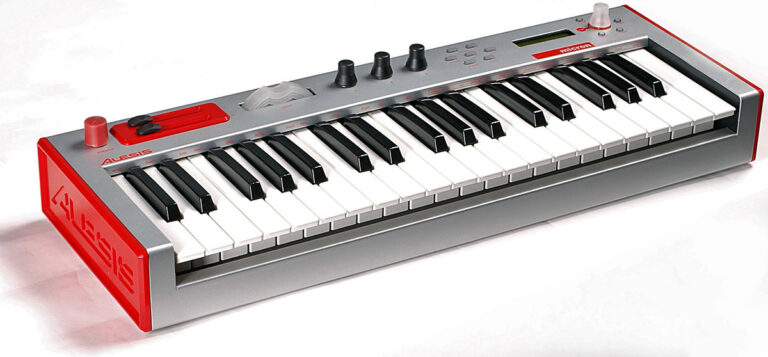
Alesis Micron
Tiny, really tiny, the micron
To preserve my Sigma and leave it at home in peace, I set out to find an analog modeling synth that would take up little space and be easy to transport. I chose the Alesis Micron, also available as a “Miniak” from Akai.
At first, I was perplexed, as I found the tones too rich in the high end, even too “cold”. But after sustained use, I now consider that it has a very personal grain, the kind that “breaks through” very easily in a mix.
Its only flaw is that it was designed by computer scientists who don’t understand the needs of musicians: the way sounds are classified and programmed is completely stupid, and makes it almost impossible to control via MIDI! So, I change the sounds on stage like in the good old days: by hand…
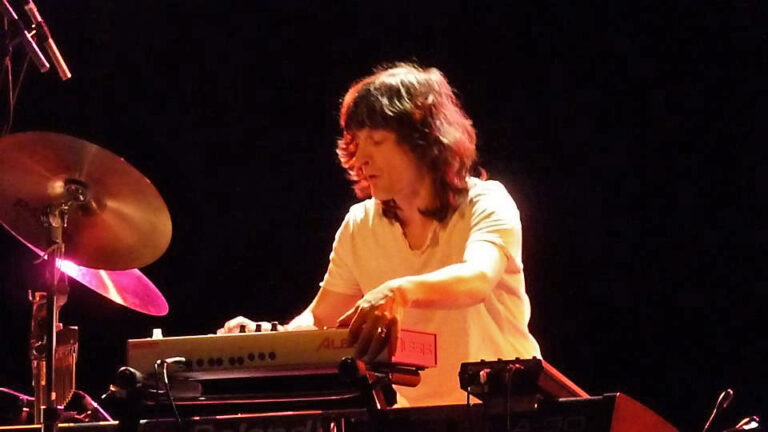
On stage, firmly holding this tiny toy!
Monophonic Keyboards
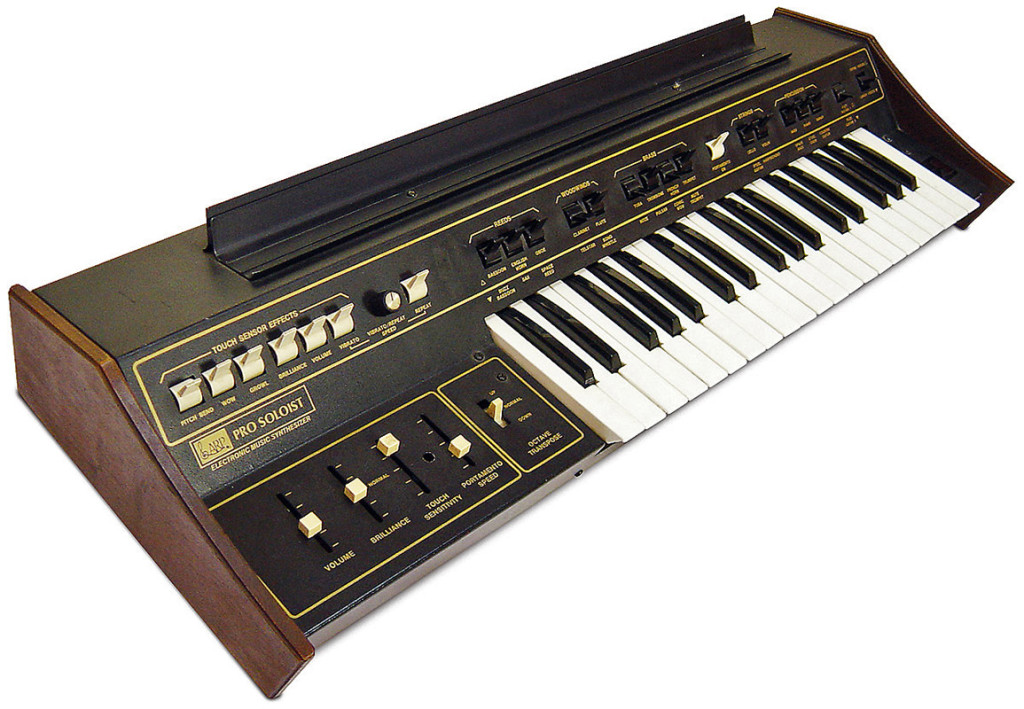
ARP Pro-Soloist
The British Class
Synth from the famous English brand, dating from 1973, and immortalized by Tony Banks (Genesis), in the album Selling England by the pound.
It is an instrument with preset, with a single oscillator, but with a very beautiful warmth of sound, and possessing wide possibilities of expression, which was new for the time, thanks to its sensitive keyboard.
Bought second-hand in 1994, I had to part with it with regret in 2007 because it was starting to show signs of wear (normal for an instrument of this age!).
I used it on stage from 1994 to 1996, it appears on the track “Étranger en sa demeure” for the compilation “Odyssey: the greatest tale”.
Monophonic Keyboards
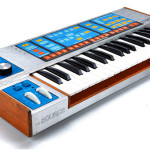
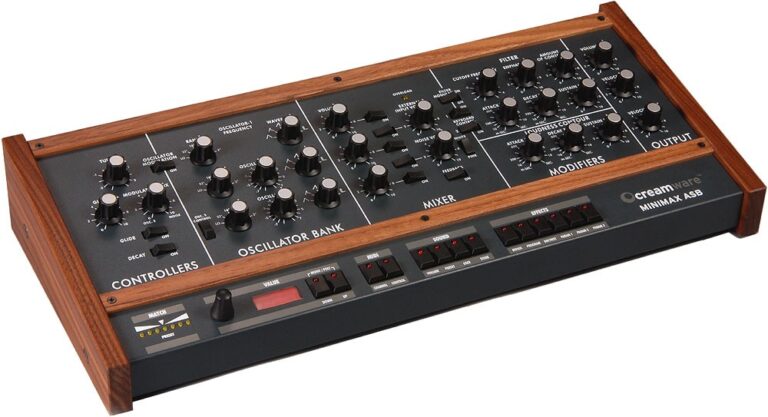
ASB MiniMax
The Mini Max
Mini Moog counterfeit
The dashboard of this beautiful synth is obviously reminiscent of the front of the famous Minimoog, and it was designed to be its digital clone. Quite rare to find, I was lucky enough to get my hands on one.
While it remains a nice synth with an analog character and the advantages offered by modern technology (programming, accuracy, effects, etc.), it must be said that we are still far from the mini in my humble opinion.
I have never had a mini under my fingers, but I know its little brother the Source well, and the Minimax does not have the warmth of its illustrious ancestors.
Furthermore, the effects are difficult to edit, except with the supplied software, but it’s not my thing at all to connect a synth to a computer (it would even tend to annoy me!). That being said, if we forget that its goal was to reproduce “you know who”, the Minimax remains a synth with a good sound and which has resources. Bought for the reformation of the group, I use it mainly on stage, controlled by my Roland A90 master keyboard.
Monophonic Keyboards
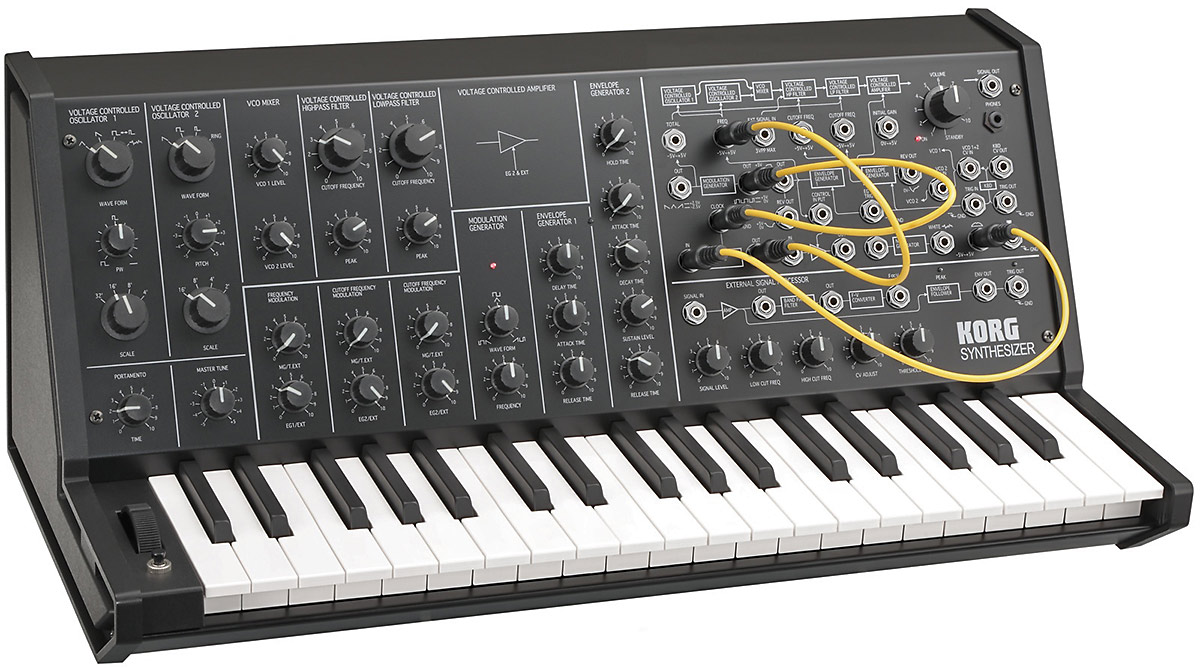
Korg MS 20
My teenage years’s pal…
The synth that made a generation of apprentice musicians dream. For 3,800 Francs in 1979, one could afford this very intelligently designed “research” monophonic instrument, with an open structure, high educational value, and a brilliant look. For my part, it was granted to me thanks to the tender generosity of my father, in the spring of 1980, and opened wide the doors of electronic instrument making for me.
Tricky to use on our first live stages (not practical to change sounds along the way), I parted with it in 1984. Its sound does not have the warmth of an ARP or a MOOG, but it has nervousness, guts, and above all great possibilities in terms of “witchcraft” and sound effects. Its second-hand price, just before its (almost) re-edition by Korg in 2013 (the MS20 “mini”), still recently reached 1000 euros … It was used on our first models, and a few CONCEPT concerts. I regret it …
Monophonic Keyboards
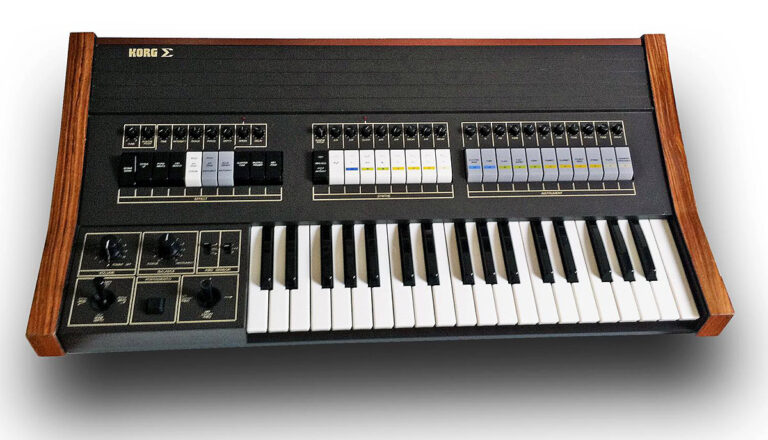
Korg Sigma
Monophonic, but strong enough…
My little darling, bought to replace the MS20, in 1984. Korg analog synths have not always been popular with musicians, but as for me, I have always admired their extraordinary reliability, robustness, and above all their impeccable accuracy and temperament. The Sigma is no exception to the rule.
The interest in the Sigma in my eyes came from its tilting “tablets” functioning as directly accessible presets, which could be combined with each other (hence the name “sigma”), making it an instrument that was easier to use on stage (at a time when very few synths were programmable).
Even today, after 30 years (!) of service, it still works very well.
Its best features: the simplest sounds, called “flute”, “oboe”, or “fuzz guitar”. The “oboe” (woodwind) especially, with a rectangular wave plucked as desired, set with a small vibrato and a reverb, works wonders (not found on any other instrument, I guarantee you!). I used the Sigma extensively in “Sarabandes”, not at all in “La Source” (alas!), very little in “Esprit d’Amor” (a shame), but again from “Atlas” onwards (glop! glop!).
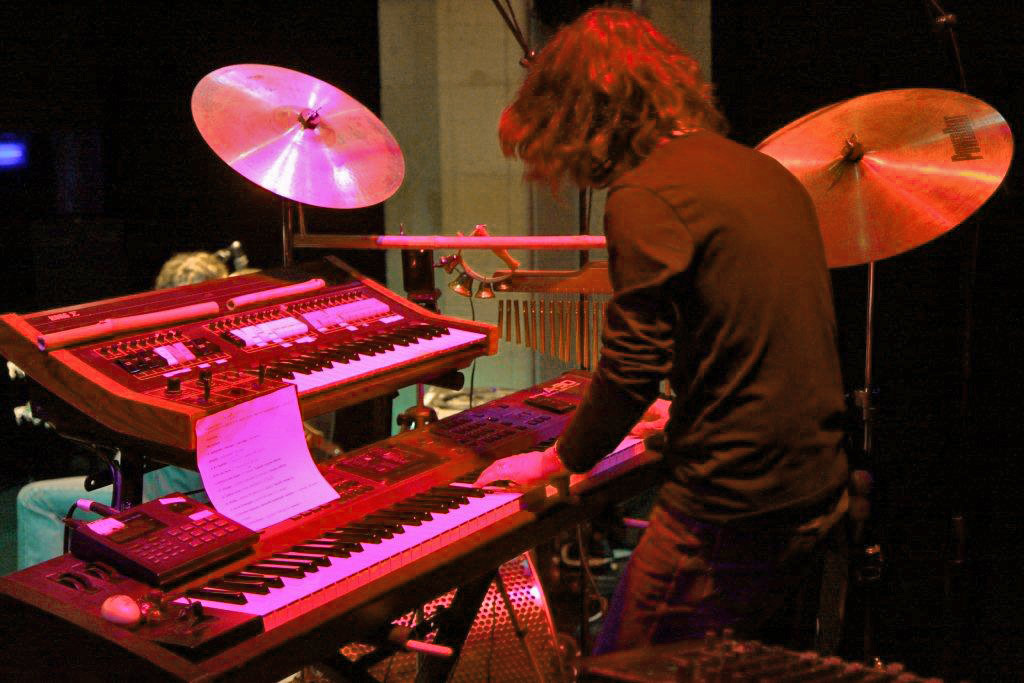
“Retour au domaine” avec le SigmaThierry avec le Korg Sigma
Monophonic Keyboards
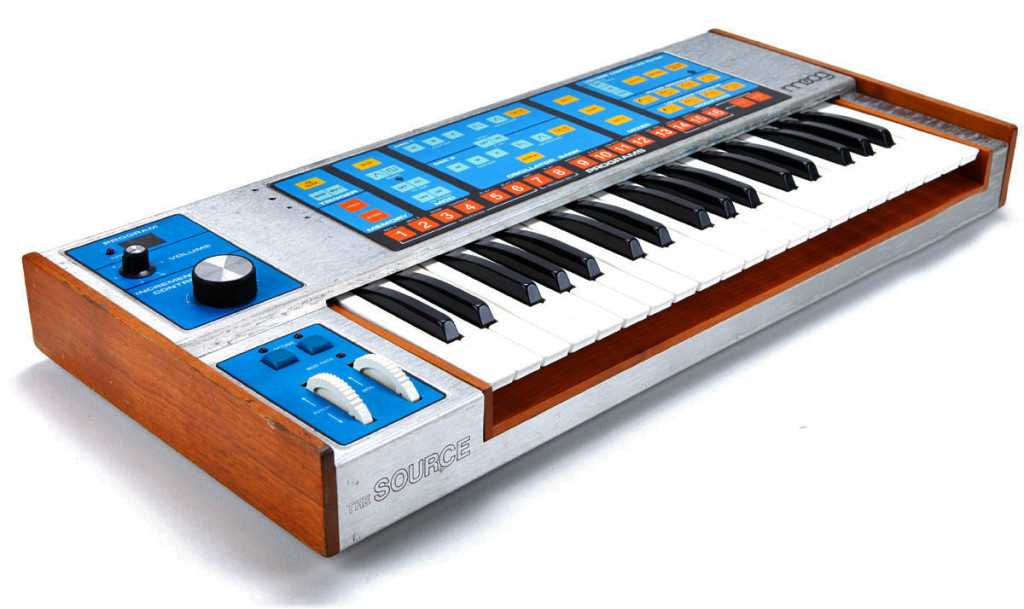
Moog Source
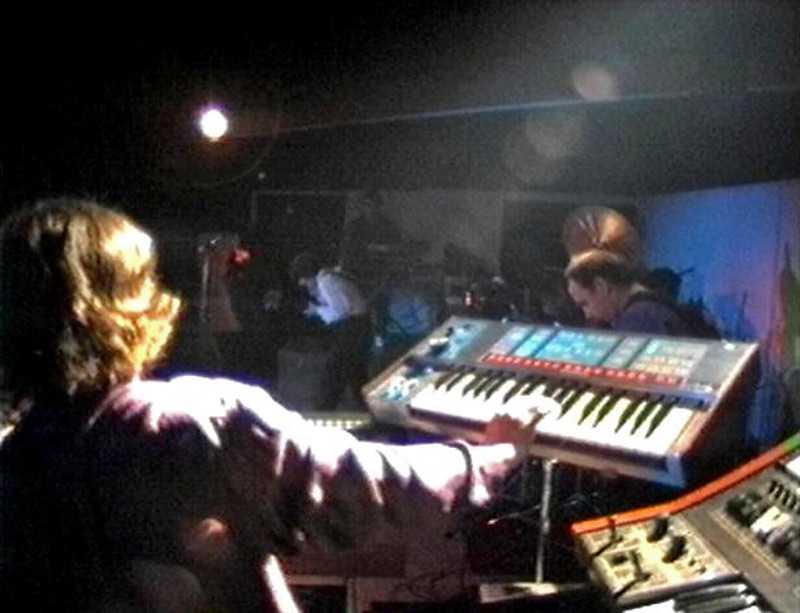
Moog sourceOn stage with the Moog
The Mini Moog little brother
The first digitally controlled analog instrument, released in 1980.
The MOOG sound is there, and beautiful: fruity, warm, edgy… But it has the flaws of innovation: its digital control management is far from perfection!
Bought almost new in 1989, I quickly had to face the facts: it was not reliable. Repeated breakdowns, unreliable tuning, and trips back and forth to Paris for costly repairs got the better of my love for this beautiful synthesizer… sold at the end of the 90s, and hardly ever used in the studio (what a shame!).
Monophonic Keyboards
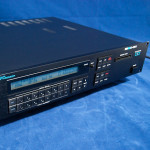
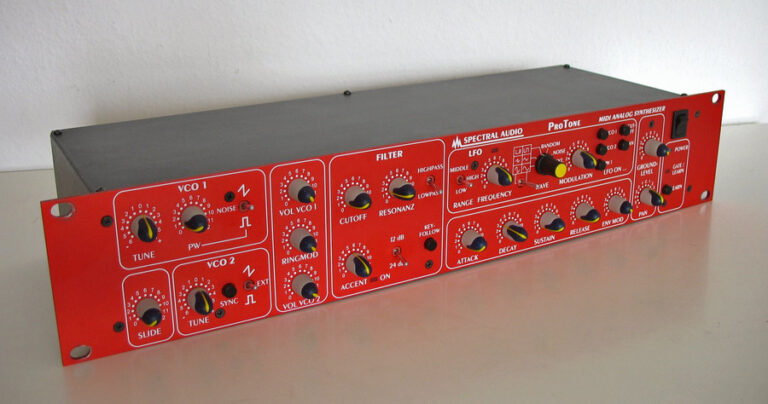
Spectral Audio Pro Tone
le Pro-Tone
A vintage look like an equalizer
In the mid-90s, analogs made a strong comeback… Thus, the Swiss brand Spectral Audio began to manufacture purely analog expanders, like this Pro Tone with its attractive look, after the “Neptune” series.
This synth has a very good sound, with a real analog “warmth”, although lacking a little nervousness.
On the other hand, it has a major flaw, making it completely unusable on stage (or even unusable altogether): it is completely fake! Indeed, the device must first warm up for at least 20 minutes, then you still have to (using a screwdriver!), adjust a rotary knob from inside the beast, to arrive by successive adjustments at a temperament that is more or less correct. Quite simply unacceptable! So, resold… Too bad… Hey, the people at Spectral Audio, you should try not to take the piss out of people, take Korg as an example, for goodness sake! Used on “Capitaines”, and the cover of “Udü Wüdü”.