Did you mean “polyphonic”? At the time, this word alone made people dream: can you imagine, a synth capable of producing several notes at once, and playing chords? But that’s crazy! It must be said that, in the mid-70s, this was still a technical feat: multiplying the oscillators within the same device to produce several waves at the same time was very expensive in terms of space and circuits, and consequently on the wallet… Thus the POLYMOOG (fake polyphonic working with the controversial “octave divider”) made more than one person dream (including Rick Wakeman), but also the fabulous Korg PS series (true polyphonic ones), like the PS 3000, (just ask my friend Olivier Graal, who is the happy owner).
In 1982, when we started to equip ourselves to form a group, the choice was difficult because we were at the turning point of an era in electronic instrument making: synthesizers were certainly beginning to become more widespread, digital was soon to emerge, but polyphonic instruments were still very expensive (more than 10,000 francs for a Roland Juno 6), and my financial means were meager (as they can be at 18 years old…).
So, the dream was simply abandoned, even if I came very close to acquiring a Yamaha SK20 (I still regret not having done so today).
Polyphonic keyboards
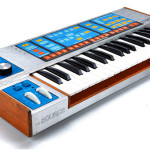
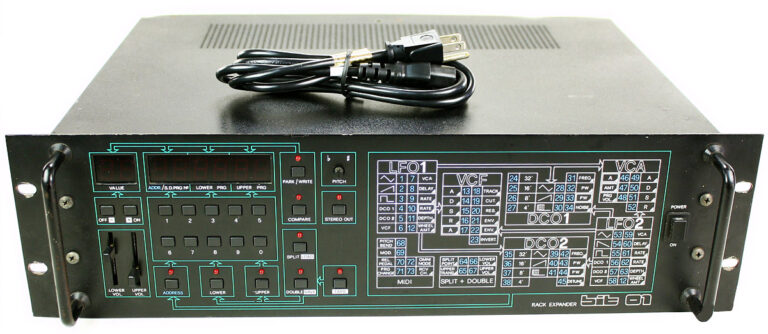
Crumar BIT One
Making a DX warmer
Faced with the difficulties encountered in trying to make the DX21 sound good, I soon decided to add a little companion in the form of a programmable analog expander with this nice Italian synth, an expander version of the BIT 99, for the tidy sum of 6,800 Francs in 1988 (all the same!). It is a 6-channel analog synth with a nice personality.
And it’s true that he succeeded well, the guy, in his mission to warm up the skinny DX 21. His fault: very annoying digital controls, and a tendency for the backup battery to lose data… Used in Sarabandes, but not in La Source (what a mistake!).
Polyphonic keyboards
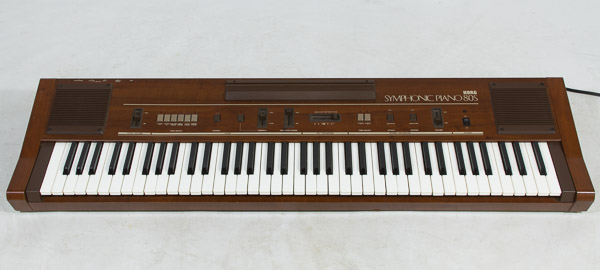
Korg Symphonic Piano 80s
Poor piano section, but rich in strings
Thierry in great outfit with SP 80s
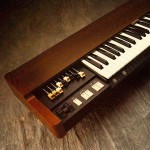
Driven by poorly assumed Jazz ambitions, I set out in search of a large keyboard instrument that could emulate a piano, and in 1984 I chose the Korg Symphonic Piano 80S with more than 6 octaves.
Big mistake! At the time, few keyboards could properly reproduce a piano sound, and the SP’s was particularly poor. It doesn’t matter, it also has superb strings that can be mixed with piano sounds.
But that wasn’t really the goal I was looking for, and I ended up with a hybrid instrument that cost me a lot of money (two months of summer job). Sold it a year later… Used (a little) on Envol Triangles…
Polyphonic keyboards
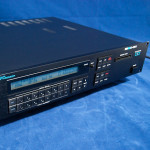
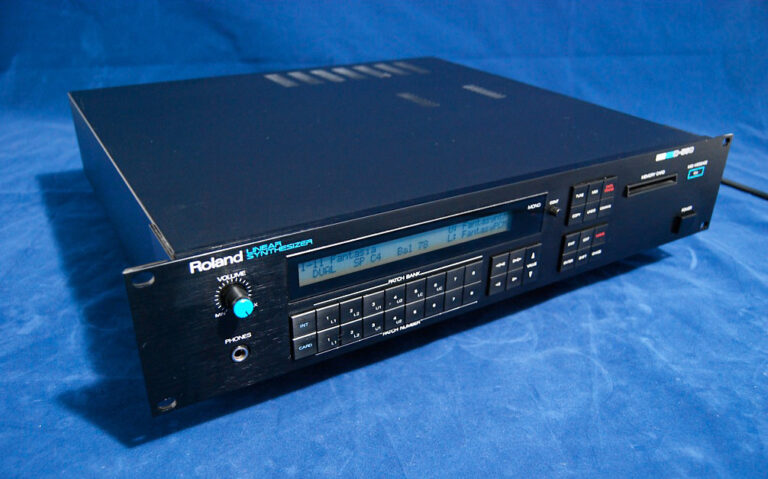
Roland D550
Le grand Bleu?
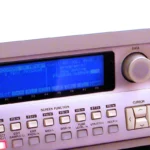
To end the reign of the Yamaha DX7, Roland’s competitors produced the famous linear synthesis D50, which marked an entire generation, as evidenced by its use in the (very bad) film The Big Blue.
And it’s true that the D50 has a real personality, the main characteristic of which lies in a mixture of warmth and sonic precision. Roland engineers understood that it was time to rediscover the charm of analog synthesis and despite its entirely digital design, the D50, through its combination of 4 waveforms (which can be either samples or analog waves), produces an extremely dynamic and rich sound.
The D550 is the expander version of the D50. In hindsight, its sounds may seem dated, but it is still very useful to me in the studio when I need to add a “layer of varnish” to certain passages. Indeed, it gives off a kind of particular aura, very fine and clearly perceptible in the mix. The D50 was used a lot on Sarabandes, which is sometimes criticized for its overly digital keyboard sounds. On the contrary, I find that the mix of digital synths of the time with analog ones like the Sigma or the Bit one, is rather successful … but go and please everyone!
Polyphonic keyboards
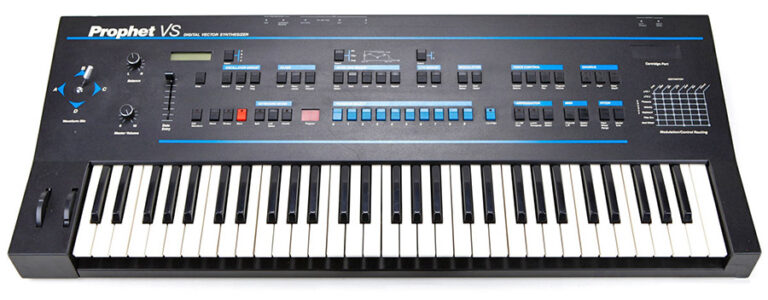
Sequential Circuit Prophet VS
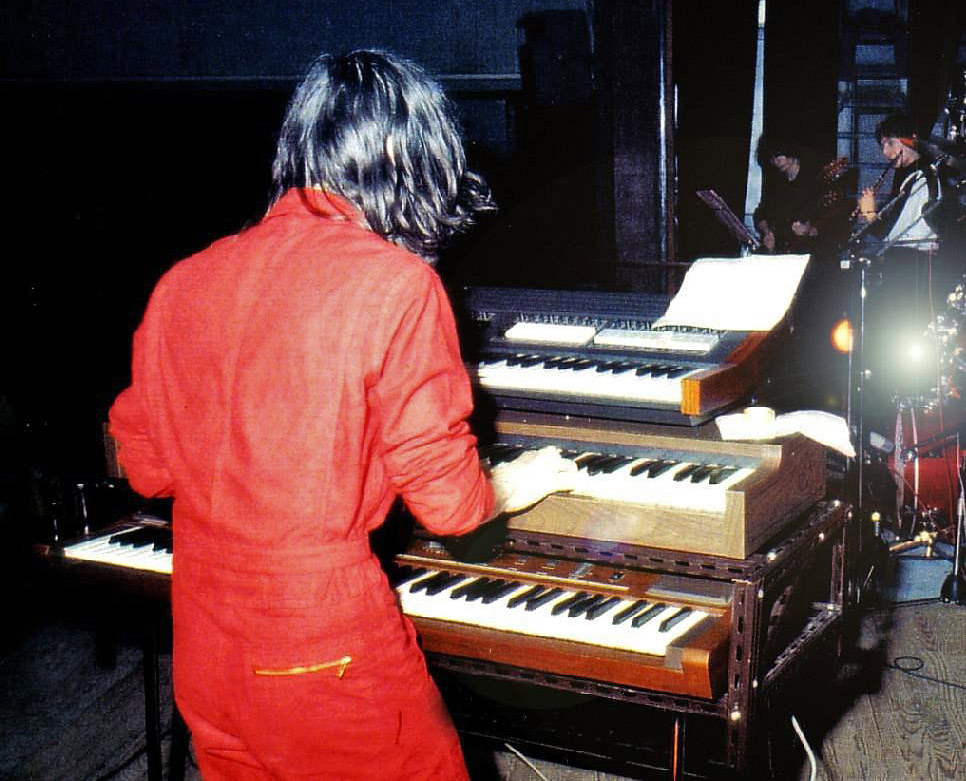
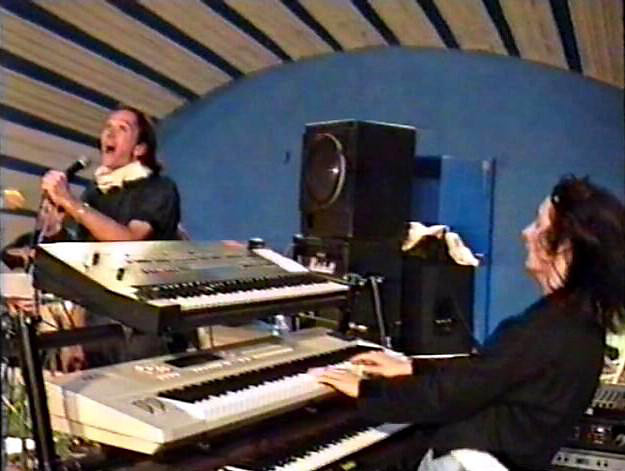
On stage with Philippe Cauvin and the Prophet
After the success of the Prophet 8 and Prophet 600, the Americans at Sequential Circuit produced this monstrous synth based on vector synthesis in 1985.
Without going into details, it involves combining four digitized waveforms in a time-evolution controlled by a programmable joystick. It’s a tough thing, both in terms of sound and the chassis, which is elegant and made of good scrap metal!
Bought second-hand, it has been with me for a long time, and has a very rich grain that mixes the warmth of analog with the precision and finesse of the digital world. Due to lack of space, and having chosen to refocus on the organ rather than accumulating synths, I parted with it in 94 (but I know where it lives!). It is still very sought after and very well rated… Used on Sarabandes.
Polyphonic keyboards
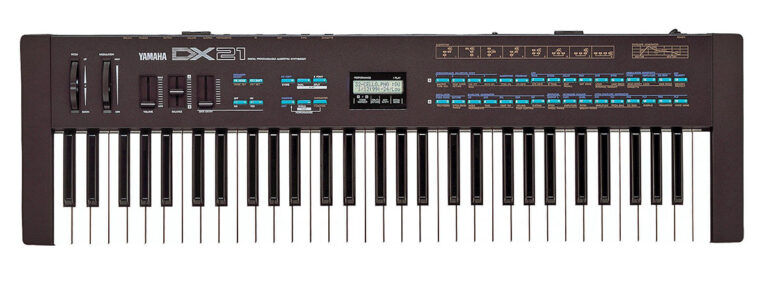
Yamaha DX-21
The poor child from the ’80s
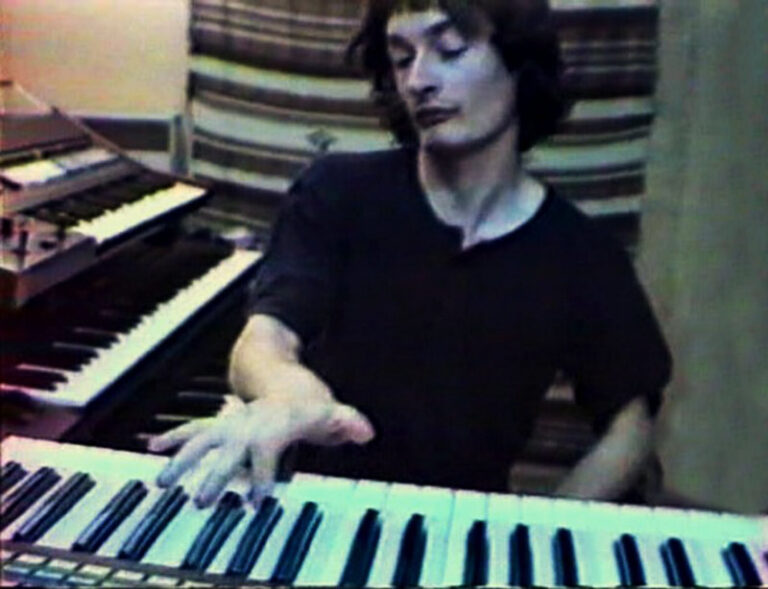
With the Yamaha DX-21
Contaminated myself, through constant repetition, by the prevailing discourse of the first half of the sinister 80s, I took my card to the majority party of the DX revolution led by Yamaha… But there you go, as I couldn’t afford a DX7, I opted in 1986 for the poor child, the DX21.
Having two generators (but fewer algorithms), I tell myself that if I put in the effort on the programming, I’ll do wonders. Alas! How many hours I’ve spent trying in vain to find warmth on this synth… In vain, the sound remains “plastic” and poor, despite all my efforts. Result: sad recordings, like on “Les Saisons Marines”, or on the countless models made at the time… As if to say, “the spirit of the times” can sometimes be quite harmful.